
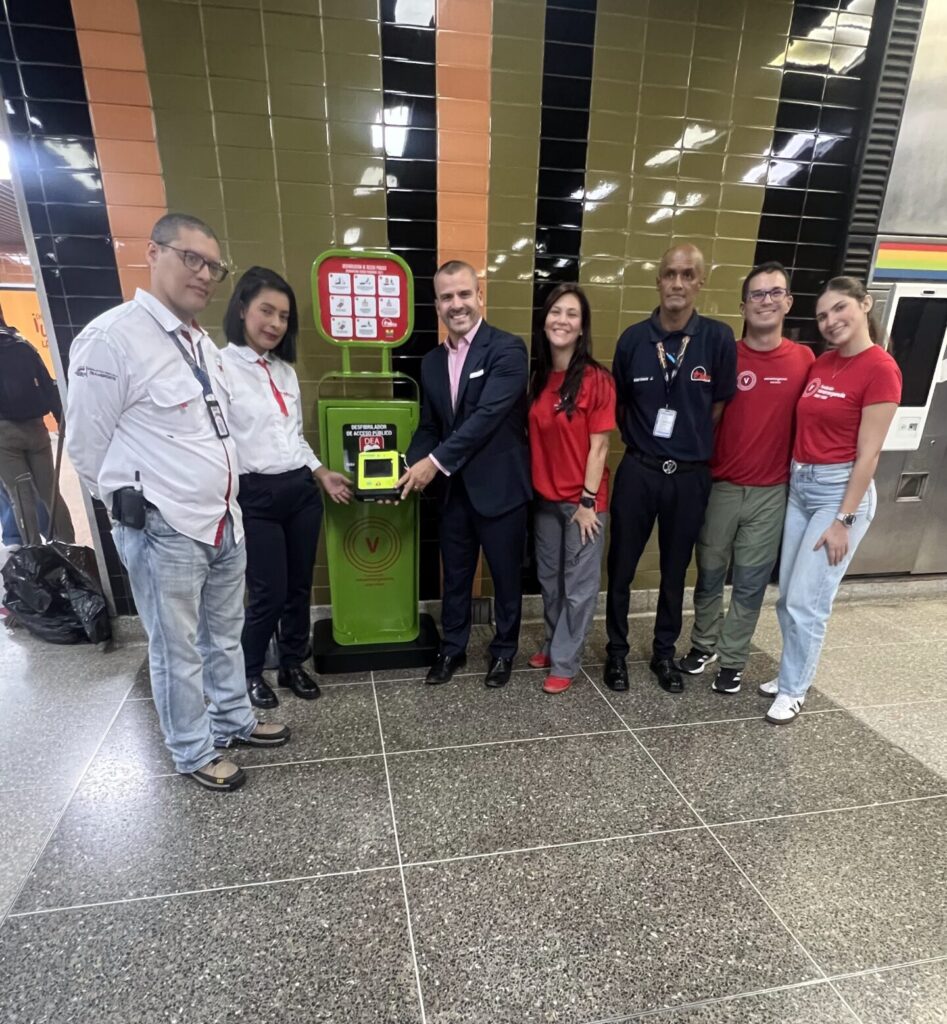
Caracas, June 2026.—Committed to transforming public spaces into safe environments for life, the Venemergencia Foundation has taken a strategic step toward creating heart-safe zones by installing Automated External Defibrillators (AEDs) at the La Hoyada, La Rinconada, and Petare stations. This milestone, achieved thanks to a partnership with Metromedia and the Caracas Metro, marks the expansion of the network of heart-safe zones to the city’s busiest transit hubs.
Expansion of Cardioprotected Zones in Caracas
La Hoyada station, a hub for mass transit, became the first site in this phase to receive device number 33. This equipment allows for immediate response to critical situations in a high-traffic area.
Meanwhile, La Rinconada station was equipped with the 34th device, reinforcing safety at a key transit hub. As the transfer point between the Caracas Metro and the Central Railway System, as well as the gateway to venues hosting large crowds such as the Poliedro de Caracas and the Simón Bolívar Monumental Stadium, this installation represents a major contribution to ensuring that the thousands of daily users traveling between the capital and the Valles del Tuy can provide a timely response to out-of-hospital medical emergencies requiring the use of an automated external defibrillator.
The expansion recently reached the Petare station with the installation of AED number 36. The strategic location of this new device strengthens the response capacity to pre-hospital emergencies in one of the system’s highest-passenger-density areas, ensuring that citizens have cutting-edge medical technology at their fingertips during critical moments.
Training and Technology
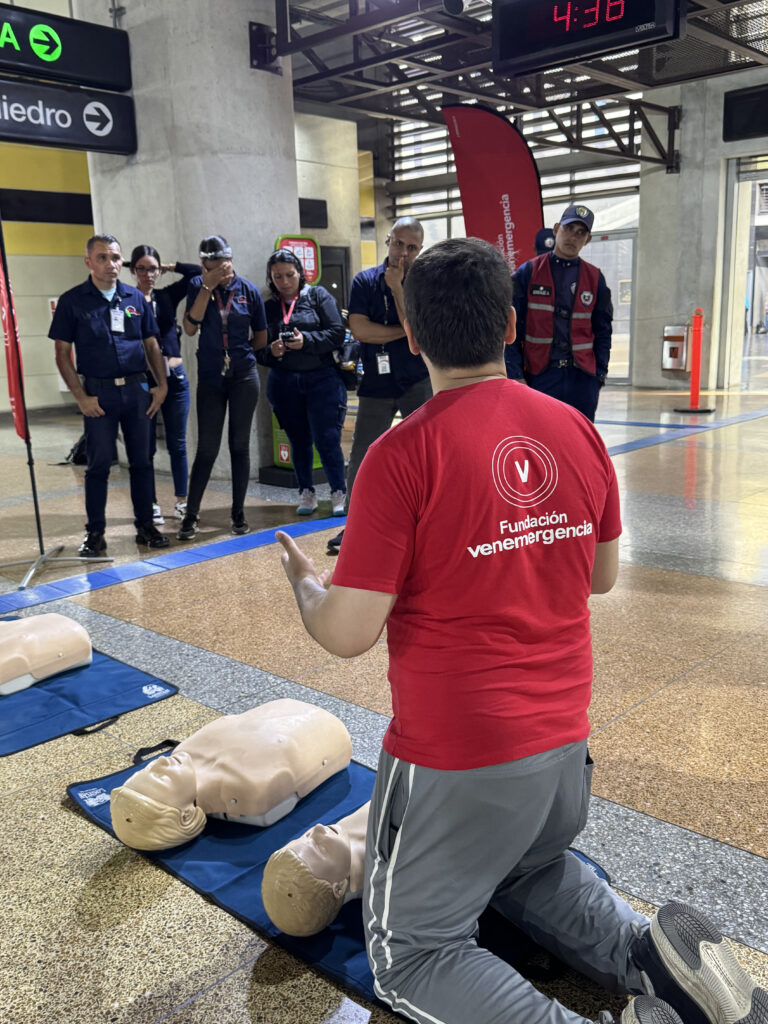
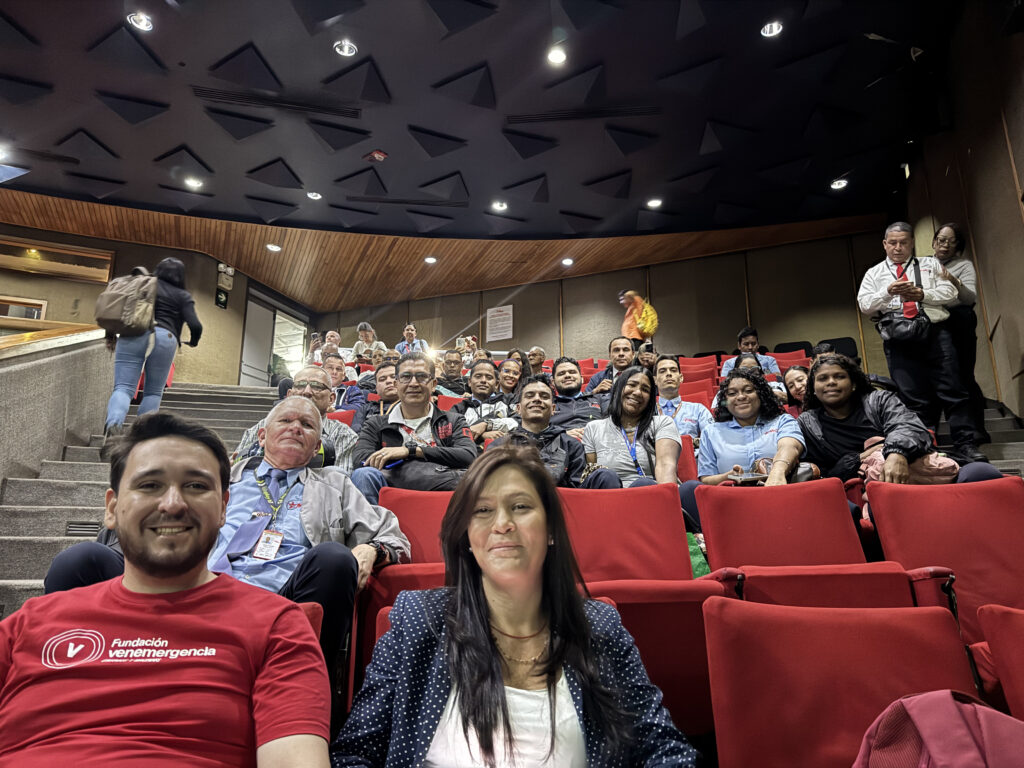
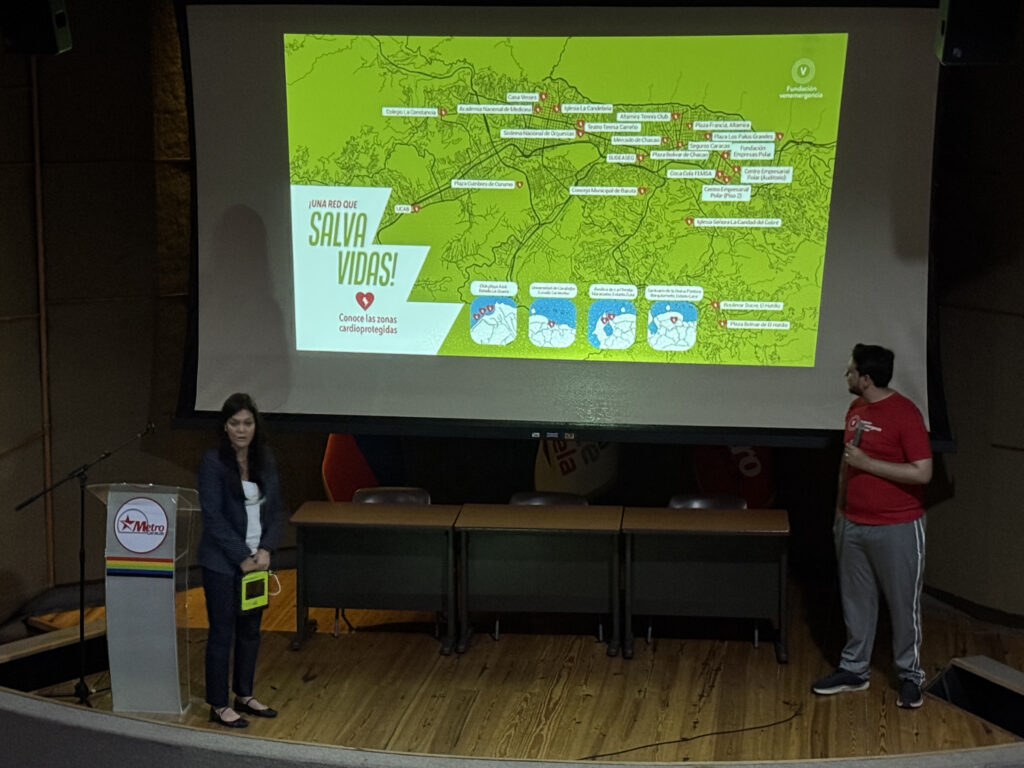
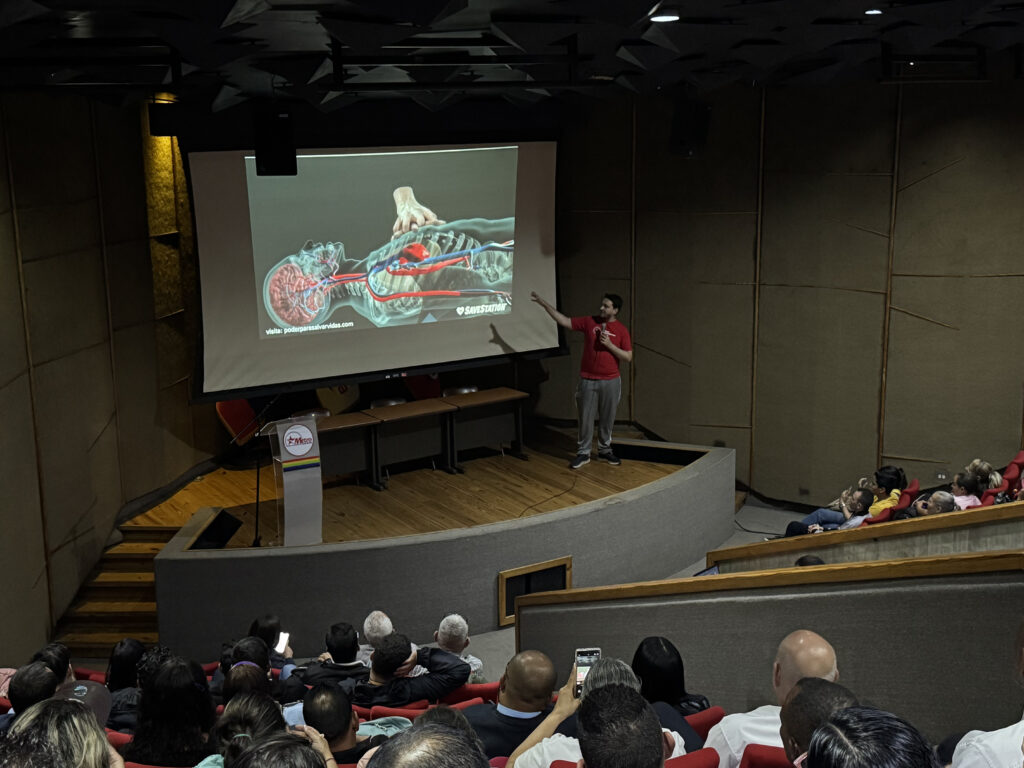
Beyond the physical installation of the equipment, the Venemergencia Foundation’s program is distinguished by its comprehensive approach. Recently, a technical training session was held at the Caracas Metro headquarters, aimed at operators from various stations across the subway system.
Dr. Andrés Simón González-Silén, founding partner and executive president of the institution, reaffirmed the purpose behind the program: “A modern city is measured by its ability to care for the lives of its people. This project reflects the responsibility we have to build a more humane, prepared, and innovative Venezuela.”
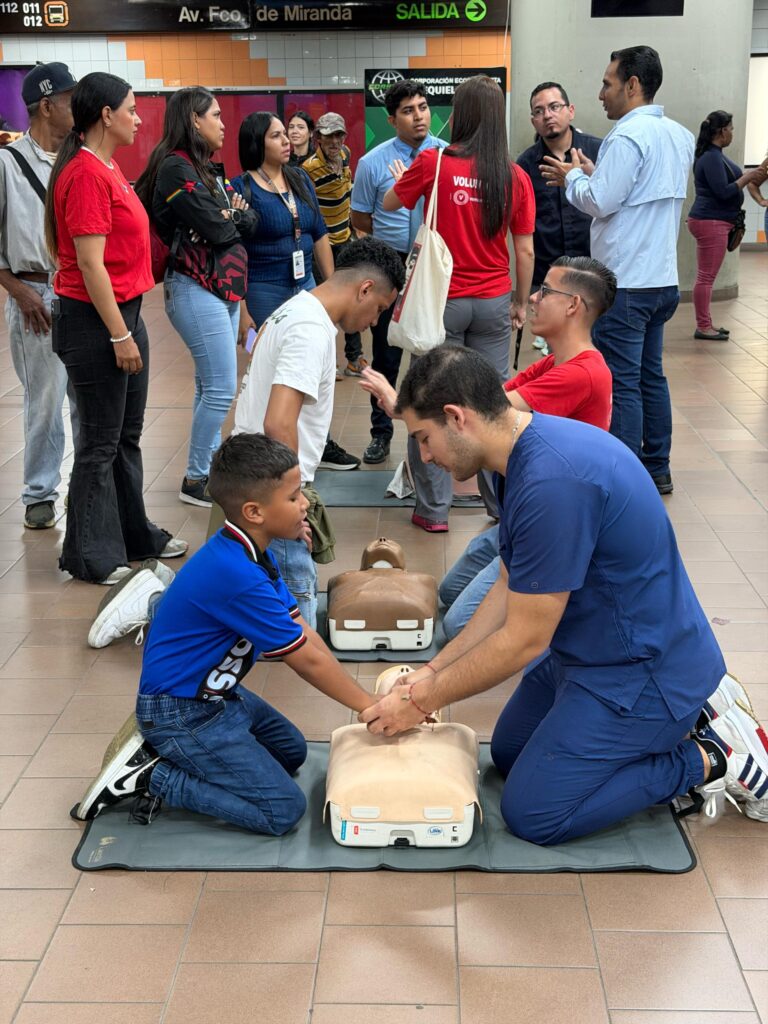
During this educational session, the foundation’s team of instructors taught the Basic Life Support (BLS) course, endorsed by the National Academy of Medicine. The workers participated in Cardiopulmonary Resuscitation (CPR) drills using specialized simulators and learned the correct protocol for the safe use of a defibrillator in the event of a cardiac arrest, ensuring that frontline staff are highly trained to save lives while professional medical services arrive.
And each installation has been accompanied by a training session for Metro System users to involve more citizens in the task of saving lives.
Vision of a Cardioprotected Venezuela
Andrea Galarraga, Director of Sustainability at the Venemergencia Foundation, highlighted the social impact of this initiative: “Protecting such key stations in the Metro system means creating a protective shield for thousands of Venezuelans, transforming public spaces into areas where life is the priority.”
With the addition of these three units, the Venemergencia Foundation continues to demonstrate that the combination of medical technology, specialized training, and public-private partnerships is the most powerful tool for improving the quality of life and safety of all Venezuelans.
You can follow us on: @venemergencia @urgentcare.ve @fundacionvenemergencia @venemergenciaauto