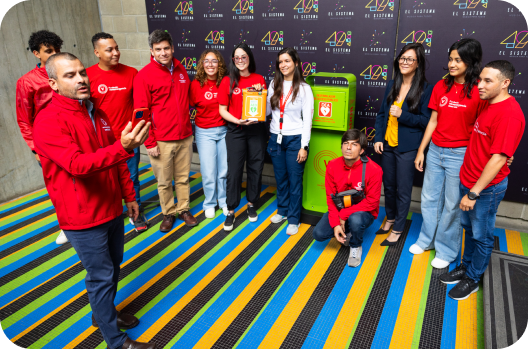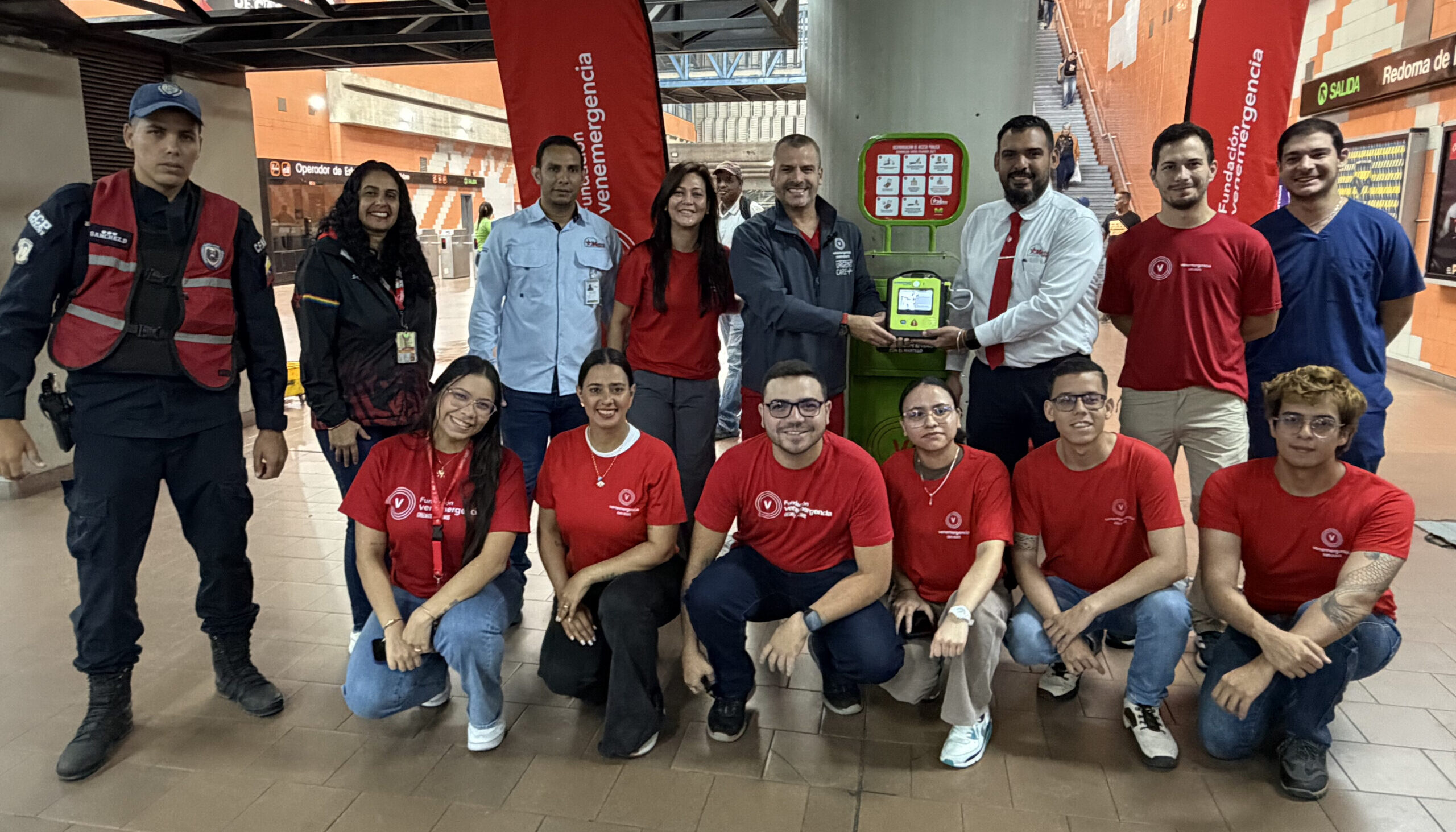
The National Center for Social Action through Music received a donation of the first automated external defibrillator (AED) as part of a three-year initiative by the Venemergencia Foundation. With this medical device, the institution has become one of the first “heart-safe zones” in the country
El Sistema Press
Thanks to the significant partnership with Venemergencia, on Tuesday, July 2, El Sistema’s headquarters will have an automated external defibrillator (AED) on its premises, which is now part of the commitment to the health and well-being of the musicians, administrative staff, and the general public who visit and spend time daily at the National Center for Social Action through Music.
With over 20 years of experience in home care, the Venemergencia Foundation works to increase the availability and distribution of these automated external defibrillators throughout the country; El Sistema is one of the first institutions to become a heart-safe zone. Eduardo Méndez, executive director of El Sistema, highlighted the importance of having this device at the Cnaspm: “We received this donation as part of the partnership we’ve had with this important Foundation for the past three years. In this space where more than 2,000 people circulate daily, having a service where an emergency can be addressed immediately—and which also trains staff—is a gift. Thank you for this benefit, for this defibrillator for the National Center for Social Action through Music and El Sistema.”
This partnership between the public and private sectors has the ultimate goal of ensuring that everyone has access to the health care and education necessary to know how to respond in an emergency. “This process includes training for all staff working here; we want one of the world’s most important orchestral networks to be prepared to handle any emergency,” explained Dr. Andrés Simón González-Silén, founding partner of Venemergencia.
González-Silén also detailed how to use the device in the absence of a trained person. “On the side of the green box containing the defibrillator, there is a button that must be pressed to activate the call to emergency services. During the call, the emergency dispatcher will provide a code to open the box containing the defibrillator and will instruct on its use or other resuscitation techniques while paramedics arrive on the scene.”
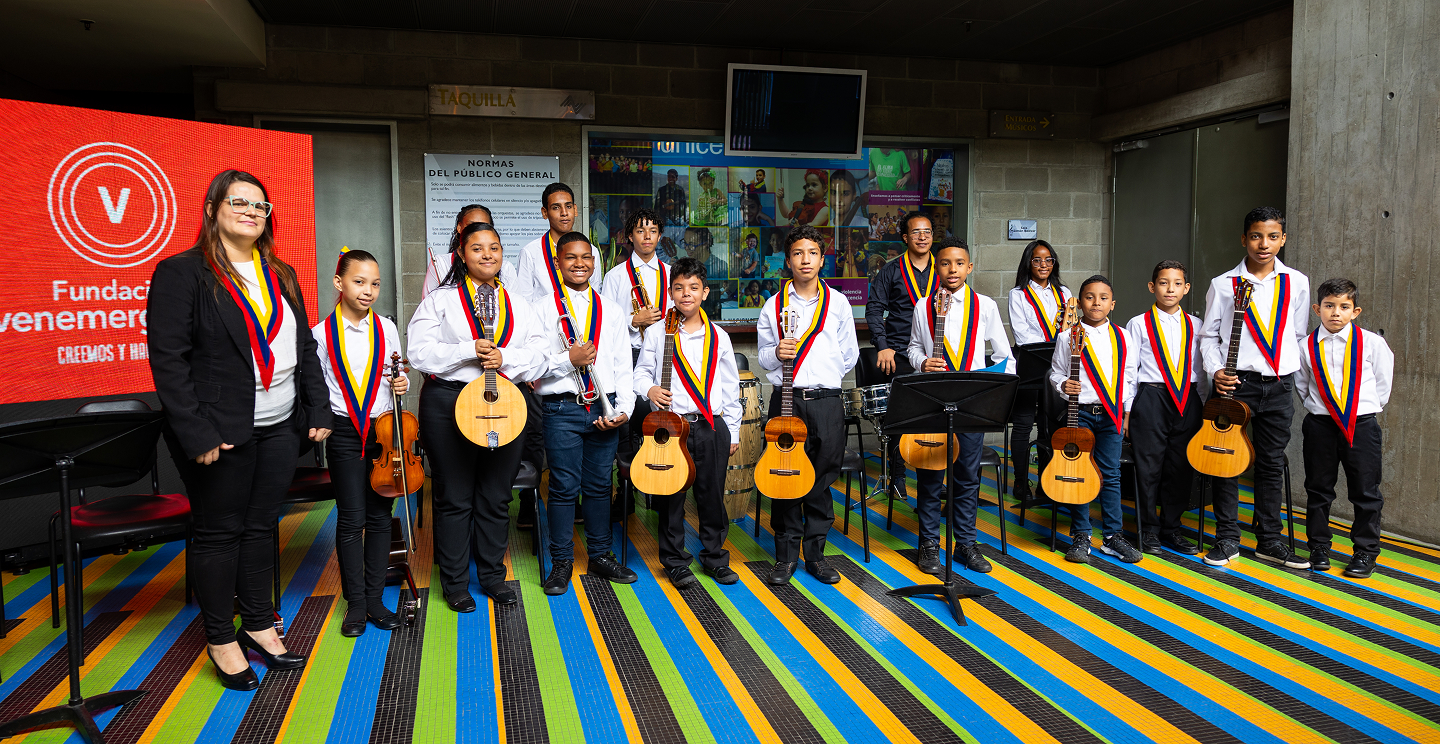
The formal handover ceremony concluded with a musical performance by a popular music ensemble from the La Ceiba Center in Parque Central, which, under the direction of Angélica Teixeira, performed a medley of popular songs, including “Guantanamera,” “El Manicero,” “Moliendo Café,” “Despacito,” and “Alma Llanera.”
Saving Lives Through Education
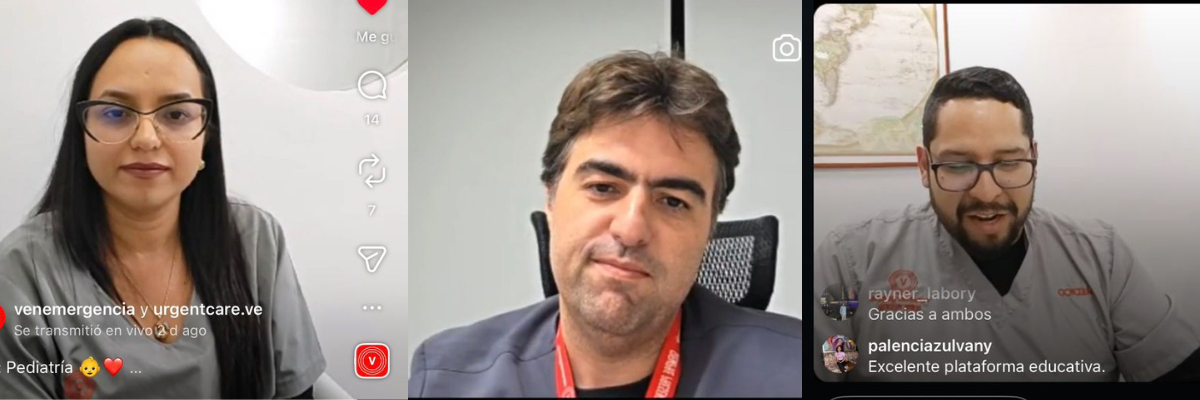
In connection with the donation of the Automated External Defibrillator (AED), on July 3, in the Fedora Alemán Hall, Basic Life Support – CPR training was conducted by staff from the Venemergencia Foundation for El Sistema personnel. During the session, a theoretical demonstration was given on the anatomy of the chest, the causes and consequences of cardiovascular diseases, prevention, and, finally, the emergency protocols to be followed in the event of a potential cardiac arrest, which consist of a series of coordinated techniques and maneuvers. In addition, a cardiopulmonary resuscitation (CPR) practice session was conducted for cases of heart attack or mechanical asphyxia.
The training program for the use of the public-access defibrillator is designed so that this tool can save a person’s life up to 80% of the time. “Having a defibrillator visibly installed makes its use practical and simple because it features a computer that uses artificial intelligence (AI) capable of determining, by placing the electrodes on the patient, the heart rhythm and, ultimately, whether or not electro-shock therapy—that is, an electric shock or cardiopulmonary resuscitation (CPR)—is necessary while paramedics arrive,” explained Jesús Martínez, a surgeon and collaborator with the foundation.
Likewise, during the workshop’s closing remarks, Martínez noted that they are aware that when people lack experience in caring for a patient with respiratory arrest or mechanical asphyxia, they may panic; however, he emphasized the importance of taking action and calling for help: “I can’t tell you not to run away in an emergency, but I do ask you—and I want you to take this lesson from the workshop with you forever—that in any emergency, calling for help is essential. Teamwork is vital in these situations.”
Strengthening partnerships committed to the health and well-being of all Venezuelans to provide the quality care is part of the agreements that reinforce the work of the National System of Youth and Children’s Orchestras and Choirs of Venezuela.