



Skip to content
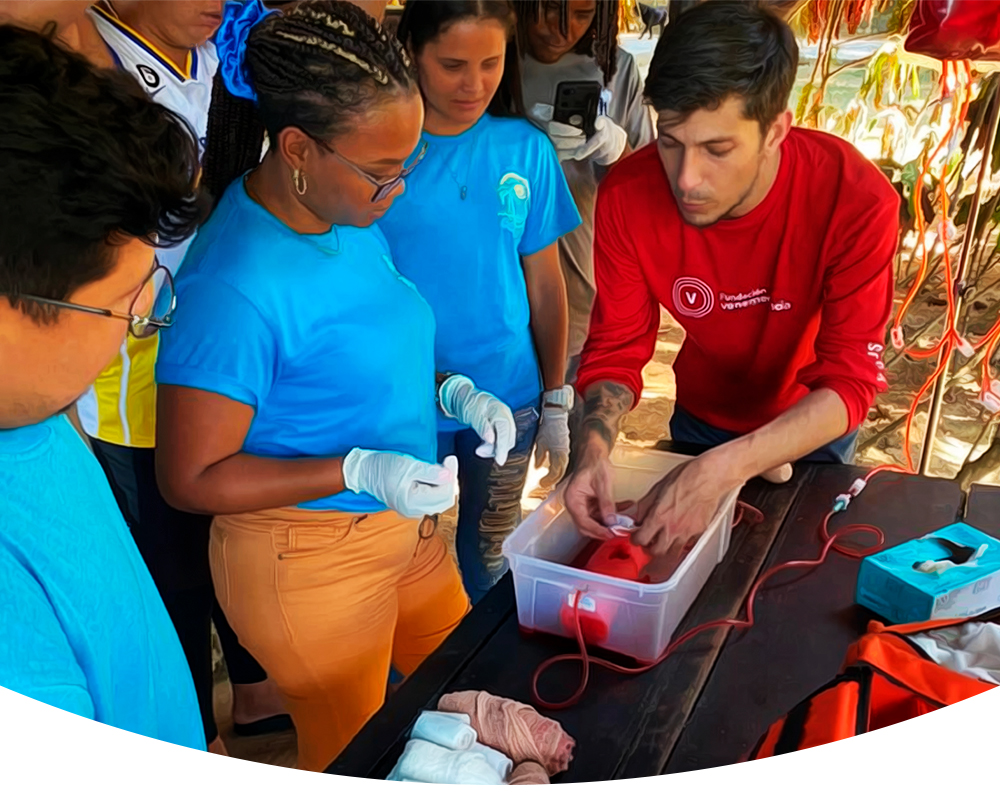
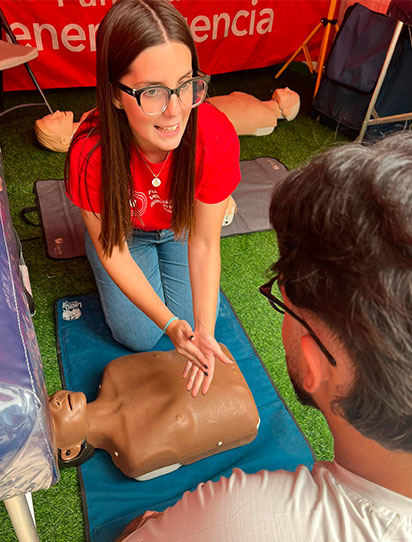
Our PAMI first aid course combines theory and practice and is designed to help you acquire critical skills in the initial assessment and management of emergencies and serious injuries. You will learn up-to-date first aid techniques that are aligned with international standards.


Transforming the system from the grassroots level to improve access to healthcare through education
Tailored to your schedule
PAMI Corporate Flash
These sessions are designed so that every employee can fit 30-minute theoretical and practical modules into their schedule, covering everything they need to know about responding to medical emergencies: the ABCDE protocol, initial assessment of an injured person, CPR for adults and children, defibrillation, initial assessment of trauma patients, and the most common medical injuries—all in 30-minute sessions.

Emergencies can happen at any time. In this course, you’ll learn basic first aid so you can respond quickly and confidently, providing assistance until professional medical help arrives.

Medical emergencies can happen to anyone, at any time, and anywhere. If you want to be prepared to care for your loved ones, this course is essential. Learn advanced protocols in our first aid course with a professional focus.

Designed for staff and instructors at camping and hiking camps, this course is a comprehensive guide to providing immediate medical care and administering first aid in critical situations.

Expand your knowledge with a more in-depth focus on first aid techniques. Learn how to effectively assess, respond to, and assist in more complex situations.

Designed for staff in neonatal and pediatric care units, mothers, and others responsible for the care of infants and children who need the knowledge and skills to respond to medical emergencies by providing first aid.

Specially designed to address medical emergencies in the food service and restaurant industry. Essential first aid techniques to save diners’ lives (how to respond to choking and allergic reactions), and to respond quickly and effectively in the kitchen to burns, bleeding, fractures, etc.

Emergencies can happen at any time. In this course, you’ll learn basic first aid so you can respond quickly and confidently, providing assistance until professional medical help arrives.

Expand your knowledge with a more in-depth look at first aid techniques. Learn how to assess, respond to, and effectively assist in more complex situations

Medical emergencies can happen to anyone, at any time, and anywhere. If you want to be prepared to care for your loved ones, this course is essential. Learn advanced protocols in our professional-level first aid course

Designed for staff in neonatal and pediatric care units, mothers, and others responsible for the care of infants and children who need the knowledge and skills to respond to medical emergencies by providing first aid

Designed for staff and instructors at camping and hiking camps, this course is a comprehensive guide to providing immediate medical care and administering first aid in critical situations

Specially designed to address medical emergencies in the food service and restaurant industry. Essential first aid techniques to save diners’ lives (how to respond to choking and allergic reactions), and to respond quickly and effectively in the kitchen to burns, bleeding, fractures, etc.
Duration: 8 hours
(in-person, theoretical and practical)
Basic PAMI
I. Initial assessment of an injured person.
II. Initial assessment protocol.
III. Cardiopulmonary Resuscitation (CPR) for adults and children.
IV. Automated External Defibrillation.
V. Initial assessment of a trauma patient (XABCDE Protocol).
VI. Most relevant medical injuries.
VII. Bandaging and immobilization.
VIII. Lifting and transporting patients.
Basic PAMI
I. Initial Assessment of an Injured
Patient II. Initial
Assessment Protocol • PAS
Protocol III. Cardiopulmonary Resuscitation (CPR) for Adults and Children
IV. Automated
External Defibrillation V. Initial Assessment of the Trauma Patient (XABCDE Protocol)
VI. Most Common
Medical Injuries • Wounds
• Burns
• Fractures
• Sprains
• Dislocations
VII. Bandaging and Immobilization
VIII. Loading and Transporting Patients
Intermediate PAMI
I. Algorithm Simulation.
II. DEA.
III. Trauma Kinematics.
IV. Secondary Assessment of an Injured Patient.
Quantification of vital signs.
V. Loading and transport of injured patients.
VI. Bandaging and immobilization of injuries.
VII. Basic airway management.
Advanced PAMI
I. Loading and transport (Ambulance).
II. Medical assessment during transport.
III. Communications.
IV. Basic recognition of common medical conditions.
V. Initial management of hypertensive crisis.
VI. Management of decompensated diabetic patients.
VII. Basic principles of administering medications under medical supervision.
VIII. Triage (classification of patients in mass casualty incidents).
Pediatric PAMI
1. Initial assessment of an injured person.
II. Cardiopulmonary Resuscitation (CPR) for children.
III. Automated External Defibrillation in children.
IV. Initial assessment of a trauma patient (XABCDE Protocol).
V. Most relevant medical injuries in pediatrics.
VI. Bandaging and immobilization.
VII. Lifting and transporting patients.
PAMI Camps /
Hikers
I. Initial assessment of an injured person.
II. Initial assessment protocol.
III. Cardiopulmonary Resuscitation (CPR) for adults and children.
IV. Automated External Defibrillation.
V. Initial assessment of a trauma patient (XABCDE Protocol).
VI. Most relevant medical injuries.
VII. Bandaging and immobilization.
VIII. Loading and transporting patients.
PAMI Gastronomic
I. Initial assessment of an injured person.
II. Initial assessment protocol.
III. Cardiopulmonary resuscitation (CPR) for adults and children.
IV. Automated external defibrillation.
V. Initial assessment of trauma patients (XABCDE Protocol).
VI. Most common medical injuries in the food service industry.
“I’m very pleased with the first-aid workshop we attended, and although I’ve had similar experiences before, I’ve never had one as comprehensive as this. I feel it’s an essential skill, especially in the culinary world.”
Fill in your information and we will contact you
BTU Building, Cecilio Acosta Street, between Páez and Sucre Streets, Chacao, Caracas, Venezuela.
Copyright © 2025 Venemergencia AG, c.a. All rights reserved ®